Platonic Mathematics

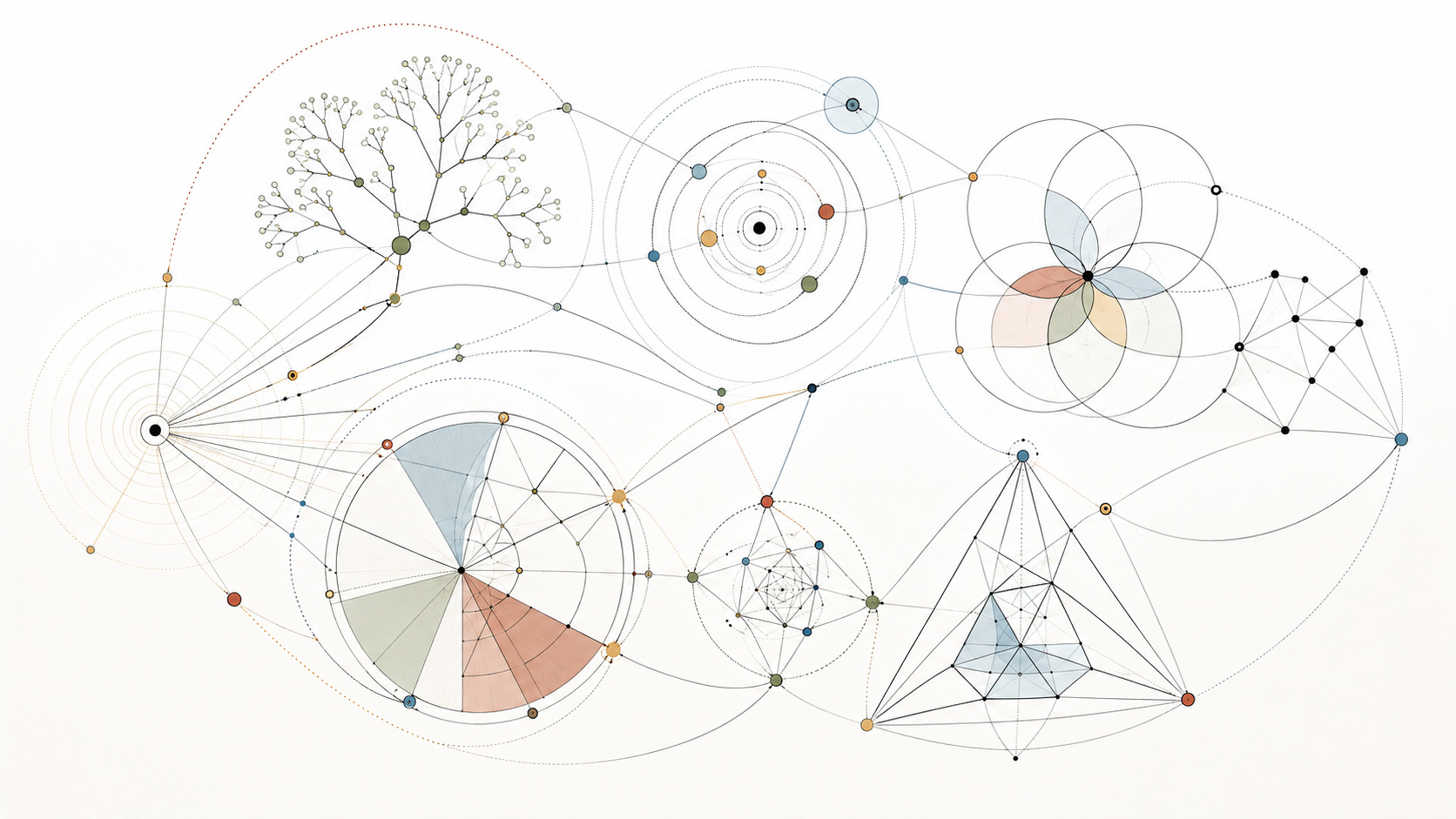
SOCRATES: Don’t we have to agree, first, that the arithmetic of the many
is one thing, and the philosophers’ arithmetic is quite another?
PROTARCHUS: How could anyone distinguish these two kinds of arithmetic?
SOCRATES: The difference is by no means small, Protarchus. First there
are those who compute sums of quite unequal units, such as two armies
or two herds of cattle, regardless whether they are tiny or huge. But then
there are the others who would not follow their example, unless it were
guaranteed that none of those infinitely many units differed in the least
from any of the others.
(Plato, Philebus 56d-e, trans. Frede)
Philosophy has become mathematics for modern thinkers, although they say that mathematics should be studied for the sake of other things.
(Aristotle, Metaphysics 992b, trans. Apostle)
The commonplace reading of this passage from the Philebus, in which Plato introduces the notion of ‘philosophical arithmetic’, stands it on its head, and asks us to believe that only the philosopher has discovered numbers at all. And yet people, Greeks included, had been doing math quite well for quite some time before Plato. When Socrates speaks of those who compute sums of unequal units, and count two armies or two herds of cattle alike as ‘two’, this is indisputably exactly what happens in mathematics as we know it. This is the discipline that works with abstract quantities, and this is emphatically not ‘philosophical’ arithmetic as Socrates describes it here. For philosophical arithmetic, by contrast, two herds of cattle and two armies will not be ‘two’ in the same way. A herd and an army are manifolds (multiplicities) formed in different ways, with different bonds among their units, grounded ultimately in the difference between the units out of which they are composed, one of cattle and one of humans. One cow and one human are both units, to be sure, and so are one herd and one army. Everything is some kind of unit; but what matters for the philosopher is what kind of unit each of these is. The philosopher will “refus[e] to proceed” with ordinary arithmetic in counting two armies and two herds of oxen, or two armies and two oxen, or two oxen and two beds, or two virtues and two poems, as simply ‘two’, “unless every unit is taken as differing in no respect from every other”—unless, in the impossible case, the units involved could be regarded as units in precisely the same respect. But they cannot, because the unities of an ox, a herd, an army, a bed, a virtue and a poem—what makes each of these things one—are inevitably and inescapably different, and this difference makes a difference to philosophical, if not to ordinary arithmetic.
This is why for the Platonists, philosophy is henology, the study of units. This is recognized by Aristotle, who states throughout his Metaphysics that this is the primary difference between himself and the Academy from which he feels himself estranged. “In saying that the One is a substance, and not that it is something else of which ‘one’ is predicated, he [Plato] spoke like the Pythagoreans,” Aristotle says in Book A (987b23), near the beginning, and near the end, in Book N, he speaks once more of all the problematic consequences which follow for thought from “positing the One as principle [archē]” (1092a7), that is, from making the concern with units that Socrates describes in the passage above from the Philebus the central concern of philosophy.
Chief among these problems, and that which motivates the entire train of thought in the Metaphysics, is that it will be difficult, in Aristotle’s judgment, for such thinkers to maintain “that the One is good”, because since absolutely everything is a ‘one’ of some kind, “every unit becomes something which is fully a good, and there will be a great abundance of goods,” (1091b25). An abundance of goods doesn’t sound like a bad problem to have. But that’s not what Aristotle means; he means rather to say that the Platonic position results in a profusion of ‘Goods’, that is, of ultimate sources or measures of value. To make unity the first principle is, in this respect, inherently to posit an abundance of ‘first principles’, and this is what Aristotle finds destructive to philosophy in Plato’s ‘philosophical arithmetic’.
For Aristotle, Plato’s system is ‘unmusical’, in the sense this term had for Greeks, which does not apply merely to ‘music’ as we use the term, but really to the entire aesthetic domain. This is the weight of Aristotle’s complaint that Speusippus’ application of Plato’s principles results in a cosmos that is “episodic”, like a bad drama (1076a4). Aristotle does not explicitly refer to the theater here, but many translators insert such a reference, since the sense of such a complaint comes from dramatic criticism, a field in which we know that Aristotle was deeply interested. We can see, moreover, from Plato’s Republic how concerned with the arts Plato himself was, and why Aristotle therefore would consider an aesthetic critique of Platonism to carry such weight. And we can see, as well, why he should turn immediately from aesthetics to politics, delivering what he sees as the mortal blow to Platonism’s “profusion of Goods”: things themselves, he says, “do not wish to be governed badly,” and hence quotes Homer, “The rule of many is not good; let one the ruler be,” (1076a5, quoting Iliad 2.204). If things had a vote, Aristotle argues, they would not vote to have their value, their Good, each in itself, or to have as many principles as the different respects in which they can be conceived. They would not wish to govern themselves or to be governed in many different ways in these different respects: they would wish to have a single governance, and to fit into a single order of things, no matter how minor a role they might play, and how little freedom or say in that governance they would have. Aristotle’s preferred model of the cosmos is thus instead like a household:
For all things are ordered in relation to one thing. It is as in a household, in which the freemen are least at liberty to act at random but all or most things are ordered, while slaves and wild animals contribute little to the common good but for the most part act at random; for such is the principle of each of these, which is their nature. I mean, for example, that all these must come together if they are to be distinguished; and this is what happens in other cases in which all the members participate in the whole. (1075a20-25, trans. Apostle)
This is emphatically not Plato’s vision, on any level, whether we are speaking of metaphysics, or of theology, or of politics. With respect to metaphysics, we have seen that Plato advocates the methodology of ‘philosophical arithmetic’, in which the uniqueness of each thing and of each kind of thing is the primary value, not what they form in any singular whole, because different units form different kinds of whole. A herd and an army are not the same kind of whole, not the same kind of unit, because they are not composed of the same kinds of units. Aristotle’s vision is sharply opposed: “For in an army goodness exists both in the order and in the general, and rather in the general; for it is not because of the order that he exists, but the order exists because of him,” (1075a15). For Plato, by contrast, we cannot expect things to have elected a single generalissimo to govern them all, and any attempt to draft everything into one Grand Army of Being is doomed to fail. We can discern the theology here from Plato’s critique of the poets in the Republic, which is motivated by the fundamental recognition that “Each of them [the Gods] is the best and the most beautiful thing possible [kallistos kai aristos ōn eis to dynaton hekastos autōn],” (Republic 381c). This is why the ‘fevered’ city, at least, in its permanent state of low-grade war, requiring total mobilization of the citizenry, cannot afford to give a great deal of latitude to poets. Aristotle, of course, in quoting Homer so pointedly, argues that his ontology will be compatible with traditional Hellenic values, whereas the Platonists, with their “profusion of Goods”, cannot help but be subversive of them. And indeed, if each God is the kallistos and the aristos, there is a sense in which They do not, and cannot have one King or one General to the exclusion of others. If the goodness proper to each God is irreducibly that God’s own way of being the best, then divine order cannot consist merely, or primarily, in subordinating every deity to some single externally imposed measure of excellence. Plato’s theology, rather, recognizes that no single poet, no single song of the Muses, has final authority over the rest, and therefore that there is no single sovereignty among the Gods, but many overlapping and differently constituted politeia, corresponding to the peculiar way in which each of Them is “the best and most beautiful”.
The metaphysically fundamental status of peculiarity or uniqueness is also why, to shift to a strictly political register, even an ideally constituted state carries within it the seeds of its own failure, on Plato’s account. The nature of the ideal state for Plato is encompassed in sorting. A perfect state would sort each individual citizen so as to find for them the perfectly suited role to play in it, which would make their talents maximally available to the state, while at the same time doing them no essential violence. It would be a bespoke state, with a role uniquely tailored to each citizen. This is Plato’s utopia.
We are accustomed to understand that there are only three roles in Plato’s ideal state, corresponding to the three parts of the soul, and that everyone would have to fit into one of these, whatever Procrustean torments would be required. But the enumeration of the parts of the soul is provisional (435c-d); specifically, the division of the soul into three parts is explicitly a lower limit, equivalent to the “three limiting notes in a musical scale—high, low, and middle,” a structure which “binds together those parts and any others there may be in between,” (443d). There are not just three notes in a scale; in fact, there are different systems of tuning altogether, the differences between which cannot be reduced to the mere presence of so-called ‘microtones’. But any such system will have extremes of some kind and a middle between them; and this is in fact all that Socrates’ analysis is committed to in any event. The analysis of the powers of the soul is thus a prime example of the kind of ‘arithmetic’ Plato teaches in the Philebus, and which he call there “a gift of the Gods to humans” (16c), in which first we assume one form for a thing,
And once we have grasped it, we must look for two, as the case would have it, or if not, for three or some other number. And we must treat every one of those further unities in the same way, until it is not only established of the original unit that it is one, many and unlimited, but also how many kinds it is. For we must not grant the form of the unlimited to the plurality before we know the exact number of every plurality that lies between the unlimited and the one. Only then is it permitted to release each kind of unity into the unlimited and let it go. (Philebus 16d-e, trans. Frede)
This is the very process which Socrates applies to the unit of the soul in the Republic, which means that its plurality is not three, period, but three plus a remainder which is in fact unlimited. It is, therefore, a problem directly analogous to that of the ‘squaring’ of a circle. The impossibility, however, of reaching the circle through a finite series of squares is exactly the problem which confronts the state, when it attempts to find a role which is the perfect fit for each unique citizen. For whether Aristotle likes it or not, things don’t fit into a single whole (whether household or army) without remainder. This also entails that any analogy between different kinds of units, such as between a city and a soul, breaks down at some point.
Let us imagine, then, life in Plato’s ideal state. Of course, there is a mistake at the outset in this undertaking, because just by virtue of the fact that it is an ideal, it could not actually be lived; any state we could live in would be some attempt to instantiate the ideal of a state. The citizens of an ideal state are ideal types of citizen, and not the kind of souls who actually exist, just like the lines and points in an ideal geometrical figure are also themselves ideal. But this poses a particular problem for the ideal of a state, the very definition of which is that it is a collective of human beings. It cannot be irrelevant for the ideal of the state, therefore, that these human beings actually have a history and a reality that exceeds being part of the whole that forms the state, whereas it is indeed not only irrelevant but incoherent to think of the lines and points in an ideal geometrical figure having some life beyond it. This is why the idea of the State is such an important idea to think about, for in doing so, one cannot avoid wrestling with problems that confront formalization itself.
Plato’s ideal state is designed around this struggle. If I am born into this state, I shall be observed intensively from my early childhood by its philosophers, who have descended back into the Cave, or been dragged, as the case may be, precisely for this purpose, their most important task—to be, in effect, the best of all possible social workers. There is no question of simply imposing a job on me. On the contrary, Socrates stresses that they are to observe the children most of all at play, in order to “see better what each of them is naturally fitted for” (537a)—to discover, rather than prescribe what I am. Under the beneficent scrutiny, then, of the greatest minds of my time, a career path is chosen for me that is supposed to be a faithful portrait of who I am and of what I apparently want, and my education begins. There is no reason, furthermore, not to extrapolate that monitoring would continue throughout life, so that if my nature seems to change, my role in the state might change as well. The wisdom applied to the state’s internal and external challenges will ensure that thrifty and timely use is made of every talent, and not a drop is wasted.
Be the state ever so well ordered, however, there are those who, having been good citizens of good cities, emerge from it nevertheless hollow within. In the Myth of Er that concludes the Republic, we learn that those who make the worst choices of their next life tend to be those who
having lived [their] previous life under an orderly constitution … had participated in virtue through habit and without philosophy. Broadly speaking, indeed, most of those who were caught out in this way were souls who had come down from heaven and who were untrained in suffering as a result,” (619c-d, trans. Grube & Reeve).
My salvation, it turns out, is something that I must attend to myself:
each of us must neglect all other subjects and be most concerned to seek out and learn those that will enable him to distinguish the good life from the bad and always to make the best choice possible in every situation. (618c)
Whatever other role I shall play in society, and whatever else I am to be trained for, I must also, it seems, train myself to be a philosopher, in an intensely private process of self-cultivation that even the most well-intentioned state, because it must, ultimately, be seeking its own good, which is not identical with my own good, however much they may inevitably overlap, because myself and the state are different units. I am not merely a part of that whole, but am a complex whole in my own right. It is not that I am a chaotic, Typhonian multitude (Phaedrus 230a), but there is something in me that exceeds any formalization of my role or type. Any portrait painted of me will capture me from only a single perspective, and this is the problem with painting, all the more so the more verisimilitude it affects. This is what Plato is concerned with when he criticizes ‘imitative’ arts in Republic Book 10. It is not the ideal, after all, which we must be concerned about doing injustice to, but rather to what we term ‘particulars’. What the painter is “deprived of” in painting solely from their own perspective is “the knowledge of each thing that is [tou ontos hekastou],” (484c). This is an instance of something that I always tell my students, and in fact anybody within earshot, namely that the most important word in Plato is hekastos, ‘each’. If you sensitize yourself to its presence, you will begin to realize just how consistent Plato is about characterizing the goal of any adequate knowledge as the knowledge of ‘peculiars’, of the idios, the unique. Again and again, knowledge is defined by him as the knowledge of each thing, not of things in the aggregate, and not of something beyond them. This is what ‘ideas’ are for: grasping ‘particulars’ in such a fashion that we always recognize in them the potential to be, or become different.
We see this as well in the Timaeus, which is especially concerned with the relationship between Being and Becoming, not in order to subordinate Becoming, but to allocate as much Being to things in process, things that come to be and pass away, as they can possibly enjoy. This is why the God (any God) is depicted there as a dēmiourgos, a craftsman, a job which was by no means necessarily held in high esteem in Plato’s own culture. Socrates is in fact criticized repeatedly by his interlocutors in the dialogues for drawing his examples from such humble professions. Nor is his culture so far down the path of extraction and exploitation as to render the analogy of ‘production’ inherently invidious yet, though this is arguable I suppose. The metaphor of an artisan, whatever its shortcomings, evidently has the value for Plato of getting the relationship between ‘forms’ and ‘particulars’ right, especially when we take into account the divine craftsman’s compassionate motives, and that the crafted item does not exist solely as the object of the creator’s intention. It is also an animal, in a relationship to the ultimate form, that of Animal, which is not that of part to whole. That is, I am not in relation to that Animal some organ or limb or specialized cell. Animals make up Animal Itself as wholes, not as parts. It is, in this respect, the ultimate State, in which alone there is no injustice. This is why, in the Myth of Er, it is suffering which, in the absence or impossibility of universal instruction in philosophy, teaches souls how to choose wisely, and which explicitly reaches beyond the limits of the human species. On the Meadow, humans and other animals are on the same footing, having learned, or failed to learn, the same ‘philosophy’, the wisdom of being an animal. No unit can be adequately understood by treating its unity as interchangeable with another’s, and the pathos of this can only truly be appreciated insofar as it is taken as literally a question of life and death, and of souls that suffer as unique and irreplaceable animals, and never merely as abstractions. The problem of mathematics is thus, for the Platonist, the problem of justice. The question with which philosophical arithmetic begins—what kind of one is this?—thus becomes the question on which a life depends: what kind of one am I?